
The EPMF’s priorities for the Circular Economy Act
The Circular Economy Act is an opportunity to make it easier for valuable materials to be recovered and kept in use across Europe. For precious metals and other critical raw materials, that depends on effective collection, clear and consistent rules, and access to specialist recycling and refining facilities.
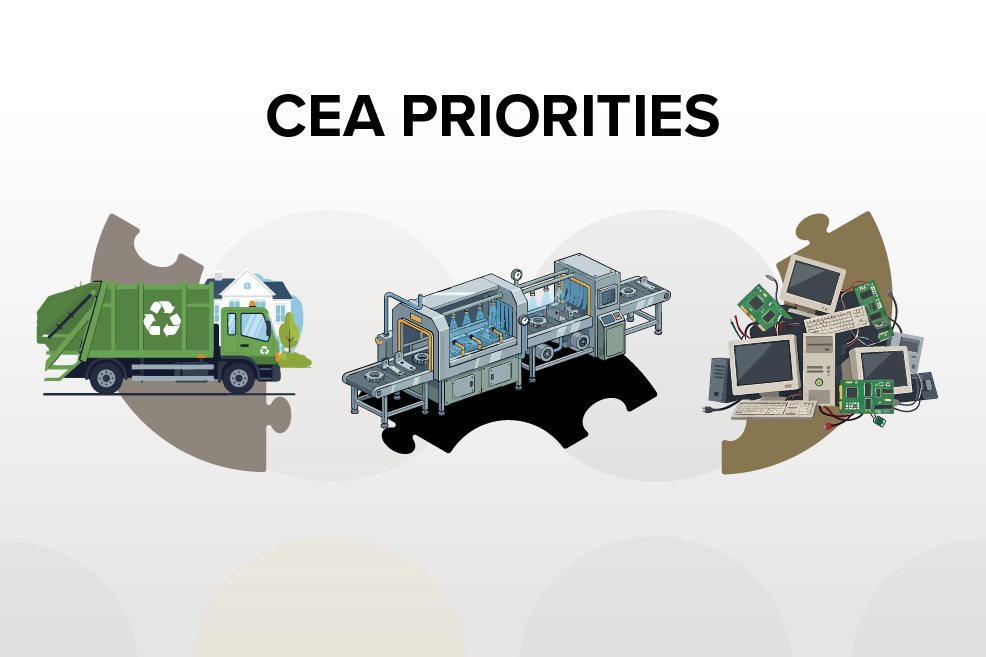
The European Precious Metals Federation (EPMF) has set out three priorities for the Act: simplifying waste shipments, creating the right conditions for competitive metals recycling in Europe, and unlocking the resource potential of e-waste and other complex waste streams.
1. Simplify and accelerate intra-EU waste shipments
Complex waste streams often need specialist treatment to recover their valuable materials. Unclear or burdensome shipment rules can make it harder to get them to the right facilities.Top of FormBottom of Form This is why the Waste Shipments Regulation should be revised during the current mandate, ahead of the envisaged 2035 review. The revised framework should make it easier to ship complex waste streams containing critical raw materials to pre-consented facilities within the EU. It should also allow shipments to facilities in like-minded partner countries that meet equivalent environmental and human health standards. As new EU waste shipment rules are introduced, clear guidance and appropriate transitional measures will be important to support a smooth changeover.
2. Create the right conditions for a competitive EU metals recycling industry
A competitive recycling industry needs rules that are clear, predictable and applied consistently across the EU. This starts with a harmonised interpretation and application of key Waste Framework Directive concepts, including by-products and end-of-waste status. Circular economy legislation should reflect how non-ferrous metals are recycled. Precious-metal-bearing waste often contains a mix of materials that require specialised metallurgical processes. Specialist recyclers and precious metals refineries are therefore an essential part of Europe’s recycling infrastructure.Top of FormBottom of Form Removing barriers and creating economic incentives to process and recycle valuable waste streams can help support this infrastructure and strengthen Europe’s capacity to recover materials.
3. Turn e-waste and complex waste streams into strategic resources
E-waste and other complex waste streams often contain precious metals and critical raw materials. Recovering those materials depends first on collecting and sorting waste effectively, so that suitable streams can reach European recyclers. E-waste shipments should also be regulated proportionately, based on the risks they pose. This means considering not only whether the waste has hazardous properties, but also its physical form, potential for exposure, containment, intended recovery operation and the destination facility’s ability to treat it safely. This is particularly important for waste containing critical raw materials. For the EPMF, a more harmonised approach to WEEE across the EU is equally important. Differences in collection rates, extended producer responsibility schemes and definitions can create fragmentation and barriers to recovery and valorisation. Addressing these differences can help valuable materials reach appropriate treatment and recovery facilities.
Precious metals supporting a more circular and competitive Europe
Taken together, these priorities focus on the practical conditions needed to recover more valuable materials: effective collection, workable shipment rules, clear and consistent regulation, and recognition of specialist recycling expertise. By building a stronger circular economy, Europe can support a more resilient and competitive industry, and the precious metals sector is ready to play its part in turning ambition into action.
Read the EPMF’s paper on its three priorities for the Circular Economy Act here.